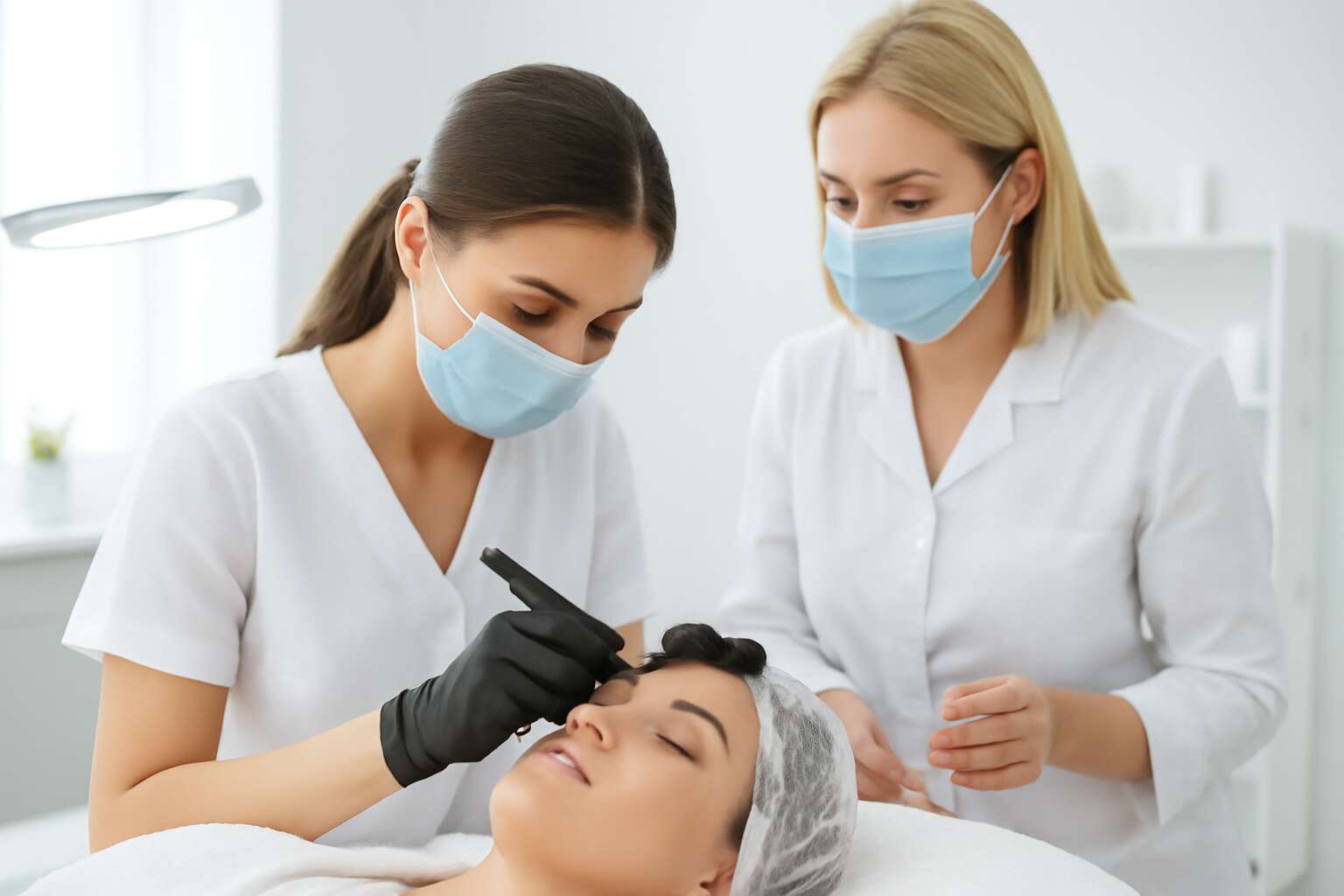
Choosing a cosmetic tattoo training program
Program formats and delivery modes
“Quality isn’t optional in cosmetic tattoo,” a veteran SA trainer says. That commitment to precision shapes every successful student and client alike!
When evaluating options from a cosmetic tattoo school, focus on formats and delivery modes that fit real-world practice. Look for programs that pair theory with substantial hands-on sessions, safety training, and client-facing skills. Consider accreditation, instructor experience, and the ability to build a portfolio as you learn.
- In-person studio sessions with live models
- Hybrid courses combining online theory with supervised clinics
- Self-paced online modules with scheduled practical assessments
SA students benefit from programs that offer local safety standards, clear pathways to certification, and ongoing mentorship after graduation.
Curriculum scope and hands-on requirements
“Quality isn’t optional in cosmetic tattoo,” says a veteran SA trainer. That conviction guides a curriculum that turns theory into practice. When you choose a cosmetic tattoo school, look for a scope that pairs solid theory with hands-on sessions, safety training, and client-facing skills.
- Core theory: skin anatomy, facial mapping, and machines
- Color theory, pigment safety, shade selection
- Sanitation, sterilization, infection control
- Client consultation, consent, ethical communication
- Hands-on practice hours with models under supervision
Hands-on requirements define the rhythm: supervised clinics, live-model sessions, and scheduled practical assessments. The right program should also offer mentorship as graduates translate study into studio confidence.
Faculty credentials and student support services
Quality isn’t optional in cosmetic tattoo, and a smart student knows to judge a cosmetic tattoo school by the company it keeps—not just the pretty portfolio. A veteran SA trainer reminds us that the best programs bind theory to clinic-ready practice, with safety and client-facing polish woven in from day one. In South Africa, the strongest curricula sit at the intersection of rigorous theory and supervised, real-world application.
Faculty credentials matter, and so does accessible student support. Look for instructors who are actively practicing, who bring recent casework to the classroom, and who mentor as a discipline rather than a distraction. A program that sustains professional development and keeps lines open between students and mentors pays dividends when the first live model steps into the chair.
- Ongoing mentorship and career coaching from experienced practitioners
- Structured student services: tutoring, exam prep, and alumni networking
- Flexible scheduling and language support to accommodate SA students
Choosing the right partner is as much about culture as credentials. A South Africa–focused cosmetic tattoo school should cultivate professional etiquette, safety discipline, and a network that nudges graduates toward confidence in the studio and in client conversations.
Facilities, equipment, and safety standards
In the dim glow of a studio, choosing a cosmetic tattoo training program becomes a pact with precision. A seasoned SA mentor reminds us: safety is the oldest spell in this craft, and it binds theory to practice. Within the walls of a cosmetic tattoo school, facilities, equipment, and safety standards are the true litmus—more telling than a pretty portfolio!
Prioritize spaces that mirror clinic rigor, not glossy façades. Consider the following signs of a mature program:
- Fully equipped, sanitation-driven studios with a clear workflow for hygiene.
- Reliable, SA-compliant equipment and access to up-to-date needles, pigments, and disposables.
- Documented safety standards, sterilization logs, and a culture of client-first etiquette.
A strong cosmetic tattoo school will couple mentors who demonstrate clean technique with a mentorship that endures beyond graduation, linking theory to tangible, real-world practice. I have watched it happen.
Curriculum and certification paths
Core theory and terminology for permanent makeup
In South Africa’s fast-changing beauty scene, a solid grounding in core theory is essential for permanent makeup success. This cosmetic tattoo school aligns theory with hands-on practice and clear certification routes. Precision is a habit, and the program builds it into every stroke.
Core theory and terminology for permanent makeup is precise work. Key topics include pigment science, colour theory, needle geometry, skin anatomy, and terminology used in client consults and record-keeping.
- Pigment science and colour theory
- Skin anatomy and dermal layers
- Needle geometry and stroke technique
- Safety, sanitation, and infection control
- Client consultation terminology and consent
Certification paths are staged: a certificate on completion, followed by supervised practicum, then a professional portfolio and assessments. The school aligns with South Africa’s regulatory expectations, offering CPD options and industry-recognized credentials to support employment or clinic growth.
Practical training hours and skill milestones
South Africa’s beauty frontier hums with possibility, and a trusted cosmetic tattoo school makes it tangible. Theory steps into practice with grace, turning careful study into confident artistry.
Curriculum and certification paths unfold as a clear rite of passage: a certificate on completion, then supervised practicum, a professional portfolio, and formal assessments. Practical training hours map growth from observation to independent client work, with steady skill milestones.
- Foundational practical sessions establishing sterile setup, instrument handling, and precise stroke control under expert guidance.
- Structured supervised practice hours advancing from demonstrations to real client work while maintaining safety and comfort.
- Portfolio development featuring a curated body of work across skin tones and client requests.
- Final assessments leading to industry credentials and CPD-ready records.
A cosmetic tattoo school keeps pace with regulatory expectations, offering CPD options and credentials clinics recognise.
Sanitation, safety certifications, and exam prep
In South Africa, the beauty frontier hums with possibility, and a cosmetic tattoo school becomes the clockwork that turns study into skill. The curriculum charts a clear rite of passage—from foundational theory to client-ready practice—guided by mentors who translate caution into artistry. “Safety is the first stroke on every client’s skin,” a master whispered, a reminder that what you learn matters as much as how you hold the pigment.
Sanitation and safety are woven into every module, ensuring graduates carry unassailable hygiene habits and licensure-ready compliance.
- Infection control, sterile technique, and cross-contamination prevention
- Safety certifications aligned with SA health standards
- Mock exams, practical assessments, and portfolio reviews
Exam prep blends theory with practice, so each candidate steps into the clinic with confidence and credentialed credibility.
Admissions, prerequisites, and accreditation
Enrollment prerequisites and eligibility
In South Africa, a recent industry survey found that 62% of clients prefer technicians with formal training, underscoring the value of choosing a reputable cosmetic tattoo school. Admissions are designed to welcome serious artists while upholding safety standards, guiding hopefuls toward a sunlit studio where artistry meets science. Applicants should be clear about their goals and ready to commit to a structured, hands-on learning journey.
Enrollment prerequisites and eligibility are straightforward, ensuring candidates are prepared for rigorous study. The steps are as follows:
- Be 18 years or older and legally eligible to study in SA.
- Submit a completed online application with ID and documents.
- Provide a health declaration confirming suitability for permanent makeup work.
- Attend an interview or short skills assessment to confirm fit.
Accreditation and outcomes are core. The cosmetic tattoo school program aligns with SAQA standards and is registered with the relevant SETA, ensuring industry-relevant outcomes and portability across South African clinics. Graduates earn a nationally recognized certificate that strengthens employability in beauty clinics and studios.
Program accreditation and licensing considerations
A robust stat anchors this path: 62% of clients prefer technicians with formal training, underscoring why choosing a top cosmetic tattoo school matters. Admissions welcome serious artists while upholding safety standards, guiding hopefuls toward a sunlit studio where artistry meets science!
- Be 18 or older and legally eligible to study in SA
- Submit a completed online application with ID and documents
- Provide a health declaration confirming suitability for permanent makeup work
- Attend an interview or short skills assessment to confirm fit
Accreditation and licensing considerations sit at the heart of the program. The cosmetic tattoo school program aligns with SAQA standards and is registered with the relevant SETA, ensuring outcomes that travel across South African clinics. Graduates earn a nationally recognized certificate that strengthens employability in beauty clinics and studios.
Application process, timelines, and admissions tips
A striking stat anchors the path: 62% of clients prefer technicians with formal training, turning the cosmetic tattoo school decision into a savvy career move. In SA, admissions require 18+, eligibility to study, an online application with ID, a health declaration, and a short interview.
Application steps are straightforward (ordered):
- Be 18+ and eligible in SA.
- Submit online application with ID.
- Provide a health declaration.
- Attend interview or skills assessment.
Timelines vary by intake; expect a 2–4 week decision window. Admissions tips: prepare documents in advance, keep copies handy, and communicate clearly with the admissions team.
Accreditation matters. The cosmetic tattoo school aligns with SAQA standards and is registered with the SETA, delivering a nationally recognized certificate portable to SA clinics.
Tuition, scholarships, and financing options
With 62% of clients preferring technicians with formal training, the cosmetic tattoo school path is a savvy career move. Admissions are structured to SAQA standards: 18+ and eligible to study in SA are baseline, followed by an online application with ID, a health declaration, and a concise interview to gauge fit and ambition.
Accreditation matters. The program aligns with SAQA standards and is registered with SETA, delivering a nationally recognized certificate portable to SA clinics.
Tuition, scholarships, and financing options help keep this path accessible. Expect transparent fees and multiple funding routes, including scholarships, flexible payment plans, and employer sponsorships.
- Scholarships and bursaries
- Flexible payment plans
- Employer sponsorships
Refund policies and contract terms
With 62% of clients preferring technicians with formal training, admissions into the cosmetic tattoo school strike a rare balance of rigor and charm. Applicants submit an online form, then face a concise interview to reveal ambition and fit. The baseline is simple—18+ and eligible to study in SA—yet the process rewards those who bring curiosity and resolve. Accreditation matters: SAQA-aligned standards, SETA registration, and a nationally portable certificate that travels from city to city.
- SAQA-aligned curriculum
- SETA-registered program
- National certificate portable to SA clinics
Refund policies and contract terms are written with candor and care. Expect a transparent cooling-off window, clear withdrawal rules, and contracts that spell out obligations and transferability. It’s the kind of pragmatism that makes the cosmetic tattoo school feel like a professional doorway, not a punchline.
Safety, sanitation, and compliance
Infection control, sterilization, and equipment safety
“Safety is the true pigment of artistry,” rings through the halls of our cosmetic tattoo school, where safety, sanitation, and compliance are woven into every stroke. Here, students meet infection control, sterilization, and equipment safety as the core colors of their craft, because beauty without care is a shadow. From consultation to aftercare, hygiene becomes second nature, and every instrument sings with cleanliness and precision!
Infection control and sterilization align with South Africa’s health standards. Sterilization is treated as careful alchemy—validated, traceable, with disposable barriers where needed—paired with ongoing equipment safety checks. The result is a learning space where students build confidence in safety as an ethos that protects both client and artist.
Client safety protocols and consent processes
“Safety is the true pigment of artistry,” a conviction echoed in every corner of our cosmetic tattoo school. Here, client safety protocols guide the conversation from the first hello to the final aftercare check, turning consent into a shared promise and records into a shield for both client and artist.
- Informed consent verification and documented agreements
- Patch testing and allergy screening before any pigment touch
- Privacy-respecting record keeping and clear, written aftercare guidance
In line with South Africa’s health standards, the approach blends hygiene with empathy—sanitizing routines, ongoing consent updates, and transparent communication. Within our spaces, compliance is a practice, not a checkbox, and every client leaves feeling respected and protected.
Waste management and needle handling guidelines
“Safety is the true pigment of artistry,” a conviction echoed across the cosmetic tattoo school. Safety, sanitation, and compliance are not mere checkboxes; they’re the living heartbeat of every technique. In South Africa, waste management, needle handling, and accountable cleaning routines shape the moment the client sits in the chair and the pigment meets skin.
Adherence includes these essentials:
- Sharps disposal in approved containers and waste segregation with needle handling guidelines
- Autoclave sterilization with process verification and maintenance logs
- Single-use implements and PPE protocols to prevent contamination
In line with South Africa’s health standards, infection control and meticulous sanitation turn every practice into a ritual of trust.
Regulatory compliance and record keeping
A striking 87% of clients say visible infection-control measures shape their confidence when choosing beauty services in South Africa. In a cosmetic tattoo school, safety, sanitation, and compliance aren’t slogans; they’re the living fabric of every technique. From initial consultation to pigment placement, hygiene governs rhythm and trust.
Regulatory compliance and record keeping are taught as craft. Autoclave verification, waste segregation in approved containers, and up-to-date maintenance logs become instinctive to students, ensuring accountability under regulatory scrutiny and in client conversations. The discipline mirrors a vow: quality today, safety tomorrow.
To keep practice transparent and trackable, our program highlights core record-keeping pillars:
- Validated sterilization and equipment maintenance logs
- Waste management and needle handling records
- Single-use implement tracking and PPE usage
Career outcomes and ongoing education
Portfolio development, case studies, and client onboarding
In South Africa’s vibrant beauty scene, 86% of graduates from our cosmetic tattoo school secure client-facing roles within six months, turning meticulous technique into thriving careers. The journey blends artistry with business readiness, producing professionals who confidently guide clients from consultation to flawless complexion.
Portfolio development, anchored by real case studies, and a seamless client onboarding process are built into every program. To illustrate, the following milestones help students showcase skill and ethics as they grow.
- Portfolio milestones: before/after galleries and consent records
- Case study library: annotated outcomes and client feedback
- Client onboarding: consult scripts, consent, scheduling, privacy
From there, ongoing education continues after graduation through advanced certifications, masterclasses, and mentorship within our network. This ensures practitioners stay current with innovations, licensing standards, and client safety expectations while expanding their professional horizons across SA clinics.
Licensing requirements by region and exam prep
In South Africa’s vibrant beauty scene, 86% of our cosmetic tattoo school graduates secure client-facing roles within six months, turning precise technique into thriving careers.
Ongoing education keeps practitioners ahead. As a cosmetic tattoo school, we ensure our alumni access advanced certifications, masterclasses, and mentorship, staying aligned with licensing standards and client safety across SA clinics.
- Licensing requirements by region: stay informed with your provincial health authority and regulatory boards to ensure compliant practice.
- Exam prep: align theory and practical assessments with regional exam formats, portfolio reviews, and safety audits.
- Ongoing credentialing: participate in continuing education credits, refresher sessions, and peer mentorship to sustain professional momentum.
Job prospects, earning potential, and career paths
Across South Africa’s dynamic beauty scene, 86% of graduates from a cosmetic tattoo school land client-facing roles within six months, turning precise line work into thriving livelihoods. Career prospects extend beyond the studio: skilled practitioners are in demand in clinics, wellness centers, and private boutiques, offering flexible schedules and recurring client streams.
- brow and lip tint specialists
- clinical settings and medical aesthetics clinics
- mobile artistry for on-site clients
With ongoing education, earning potential climbs as portfolios grow and reputations mature. To sustain momentum, alumni engage in mentorship, refresher sessions, and advanced masterclasses, staying attuned to evolving safety standards and client expectations. The journey continues as practitioners build a brand, refine a technique, and carve a niche that resonates with clients.

0 Comments