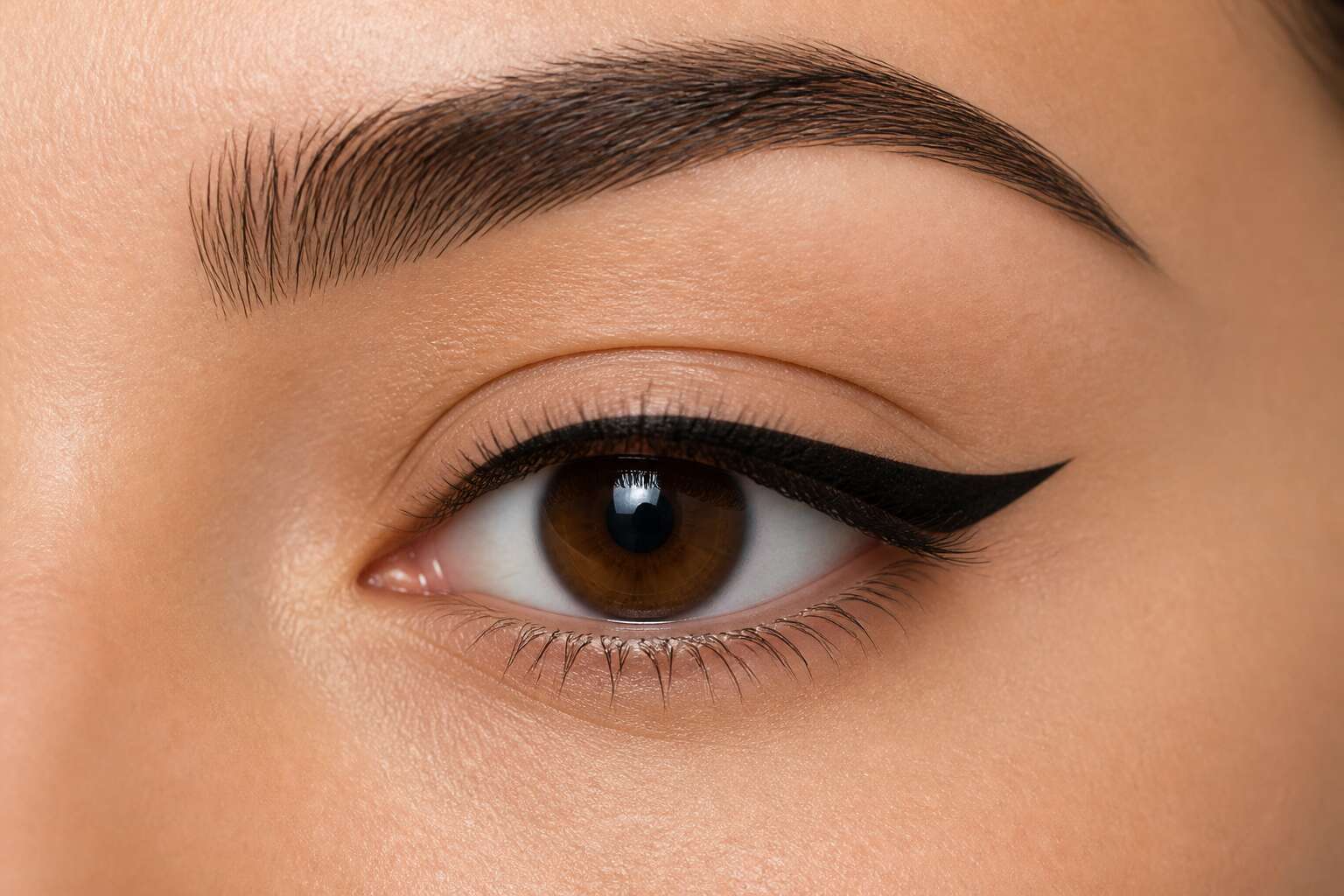
Understanding Temporary Eyeliner Tattoos
I once watched a friend weep into her mirror after her “permanent” eyeliner turned an unfortunate shade of swamp green. That is why I adore the eyeliner tattoo temporary route instead. It offers the dramatic flick without the lifelong commitment.
Temporary eyeliner tattoos use a gentler pigment that fades over weeks. They are ideal for Joburg’s punishing heat, where you want to look polished but not wrestle a liner pen at 6 a.m. Here are three things to know before you book your session:
- It fades unevenly, so plan for a patchy week.
- The pigment sits on the skin’s surface, not deep like its permanent cousin.
- Your undertone changes the final hue, so a swatch test is non-negotiable.
Understanding the difference saves you panic. The eyeliner tattoo temporary option gives you a beauty boost, then quietly departs. No regrets, just smudged confidence.
Benefits and Risks of Temporary Eyeliner Tattoos
Considering an eyeliner tattoo temporary option before committing to permanent pigmentation is a wise approach. The benefits are compelling, but so are the risks.
- Time saved on daily makeup application
- Smudge-proof definition that lasts through humidity
- A softer look that fades naturally over time
However, an eyeliner tattoo temporary procedure still involves needles and pigment. Infection risks exist if the studio is not sterile. Allergic reactions happen, especially near the delicate eye area. Uneven fading can leave you with patchy lines.
Choose a reputable technician in South Africa who offers patch tests. Understand that results vary widely based on skin type. Weigh the convenience against the permanence of the pigment. Your eyes are irreplaceable. An eyeliner tattoo temporary solution should never compromise your safety.
How to Choose the Right Temporary Eyeliner Tattoo Method
Across South Africa, the demand for eyeliner tattoo temporary options has jumped by 35% in the last year. Choosing the right method depends on your skin, your schedule, and your nerve. Some options last a single evening. Others linger for a full week. I always advise a patch test before any commitment. Here is a breakdown of popular approaches:
- Sticker transfers last 1 to 2 days, perfect for precision.
- Henna tint lasts 5 to 7 days, ideal for a smudged look.
- Press-on pigments fade after 3 to 4 days, great for beginners.
Your waterline and oily eyelids change everything. A glossy product may smear on you. A matte formula stays put. Reading the ingredient list makes all the difference. Never skip a patch test, even if you are impatient. A quality eyeliner tattoo temporary should feel weightless and vanish without trauma.
Aftercare and Maintenance for Temporary Eyeliner Tattoos
Eighty percent of fading happens in the first week, and most of it is your fault. Your eyeliner tattoo temporary is not a miracle; it is a collaboration. The first 48 hours decide whether the pigment stays or slides away.
Cleanse with sterile water and a soft cotton pad, twice each day. Pat the area dry with a fresh towel, and never ever pull at the skin.
- Use a fragrance free ointment right after cleaning
- Skip all lash serums and cream shadows
- Keep your face away from direct water pressure
Flaking will convince you something went wrong. It did not! My own temporary line looked patchy until day six. Give it time, and your eyeliner tattoo temporary will settle into a soft, smudge proof definition.
Removal and Touch-Up Options
Even the best eyeliner tattoo temporary needs a plan. The pigment sits closer to the skin’s surface than a permanent ink, which means it fades unevenly if you’re not careful. I’ve seen clients panic when their line turns ashy after six months. It’s normal.
Removal is rarely needed with a temporary formula, but it happens. Saline solution removal works best on fresh pigment. Laser does nothing on some light tints, so don’t waste your money before asking.
Touch-ups are the practical route for anyone wearing an eyeliner tattoo temporary. Most artists recommend one every twelve to eighteen months, depending on your skin’s oil production. Here’s what typically gets adjusted:
- The wing shape, which tends to blur first
- The inner corner, where pigment vanishes fastest
- The colour depth, if your base faded too warm


0 Comments