Understanding Permanent Eyeliner and the Removal Process
Why People Seek Permanent Eyeliner Removal
Permanent eyeliner promises a lifetime of sharp wings, yet a surprising number of women book removal appointments within two years. The permanence we once adored becomes a daily reminder of a past preference. Tastes change. Pigment shifts. The mirror reveals a line that no longer matches the person looking back.
People seek permanent eyeliner removal for reasons both practical and existential. The black ink may fade to a murky blue. The original shape, applied with youthful confidence, now sits unevenly against ageing skin. Laser and saline are the common routes, each demanding patience and a tolerance for temporary scabbing.
- Fashion cycles, which never rest, turn today’s bold stroke into tomorrow’s dated smudge
- Medical concerns, from allergic reactions to granulomas
- The simple exhaustion of explaining, “No, it doesn’t wash off”
Understanding how to remove permanent eyeliner begins with accepting that this is a removal, not a correction.
How Permanent Eyeliner Differs from Traditional Makeup
The distinction between a swipe of eyeliner and a permanent line is one of depth, both literal and figurative. Traditional makeup rests on the epidermis, departing with warm water and cleanser. Permanent eyeliner embeds pigment into the dermis, the same layer a tattoo needle reaches. That is why how to remove permanent eyeliner requires more than a cotton pad and determination.
The removal process honours this difference. Laser pulses shatter pigment into fragments the lymphatic system carries away. Saline removal draws the ink out through osmosis. Both demand multiple sessions, for the dermis holds colour with tenacity. Clients who ask how to remove permanent eyeliner safely soon learn that patience matters most!
I tell clients the truth: the line that flattered you at twenty-five will not age with you. It sits in the dermis, indifferent to changing tastes.
Factors That Influence Removal Difficulty
Understanding permanent eyeliner begins with pigment chemistry. The ink sits in the dermis, compounded with carriers and colourants that differ from brand to brand. Some formulations use iron oxides, others use carbon black. Each reacts differently to laser wavelengths, which dictates how many sessions you need. In my experience with South African clients, this variation matters more than any other factor!
Removal difficulty also hinges on the technician’s skill. Shallow strokes in the upper dermis respond quicker to treatment. Deep saturation buries pigment where lymph drainage cannot reach as readily. Scar tissue from a botched application further complicates how to remove permanent eyeliner, as the laser must penetrate through fibrous barriers.
- Skin type and phototype, which influence how the body metabolises pigment
- Age of the tattoo, as older pigment settles and oxidises differently
- The technician’s choice of anaesthetic and aftercare, which can affect tissue recovery between sessions
Realistic Expectations for the Removal Journey
Understanding how to remove permanent eyeliner begins with a biological truth: the body performs the actual removal work. Laser energy fractures pigment into microscopic shards, and your lymphatic system clears them over weeks. This is why clinics space sessions apart! Each visit builds on the previous one, and fading continues long after you leave the treatment room.
Realistic expectations anchor the journey. Complete erasure is rare. Most clients achieve 70 to 90 percent lightening, and a faint trace may remain. In my experience, the process tests patience more than pain tolerance. Some colours shift during treatment. Black ink breaks down predictably, while certain pigments oxidise to a greyish tone before fading further.
Professional Removal Methods for Pigmented Eyeliner
Laser Tattoo Removal for the Eye Area
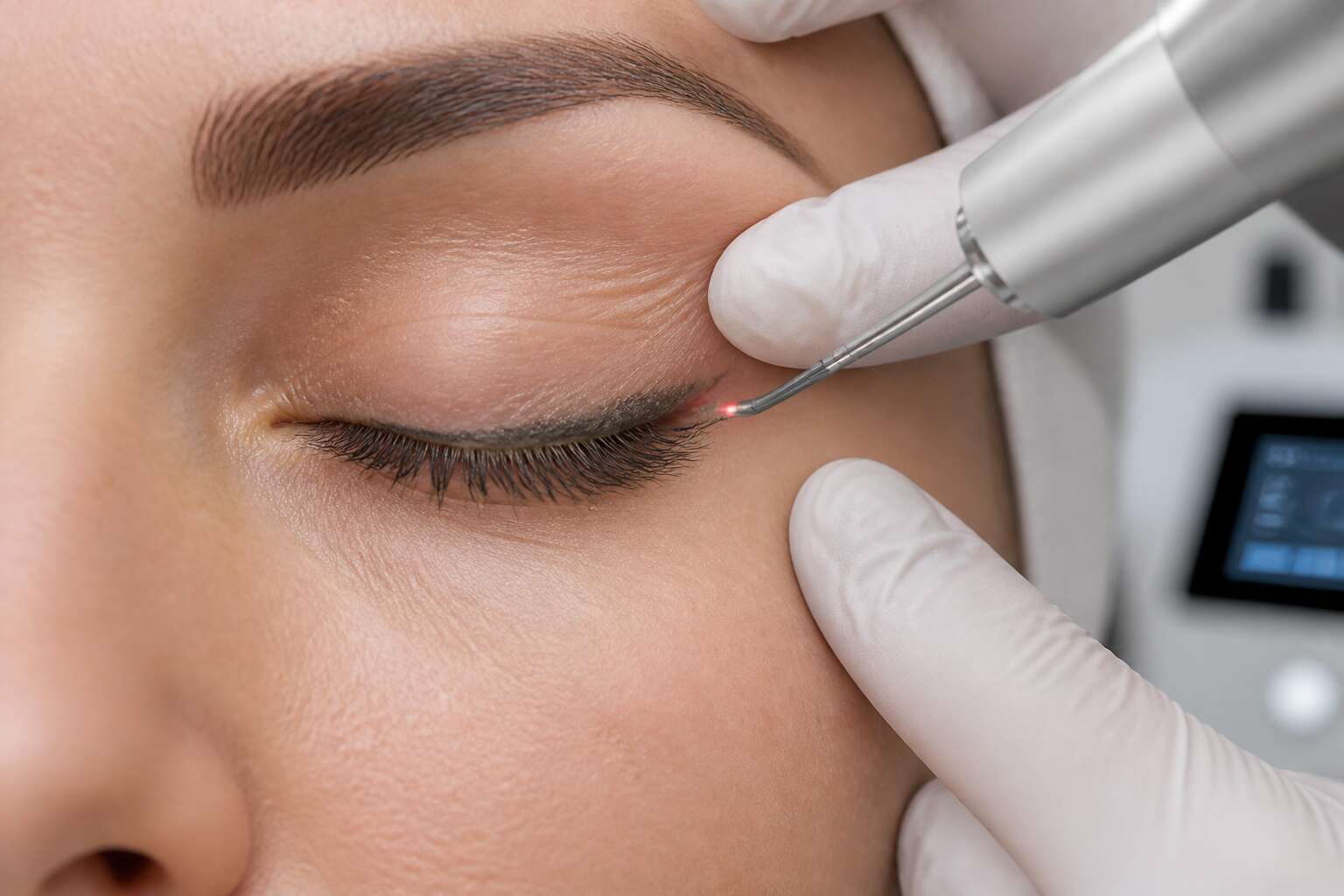
Laser tattoo removal for the eye area demands a specialist’s hand. The skin here is among the thinnest on the body, and pigment sits closer to the surface than on an arm or ankle. Q-switched lasers remain the established method, emitting pulses measured in nanoseconds to shatter ink particles without scarring the lid.
If you are exploring how to remove permanent eyeliner, South African clinics approach this procedure with careful screening. The technician assesses pigment depth and colour before selecting wavelengths. Black ink responds well to 1064nm; green pigment requires different frequencies entirely.
Common laser types used for periocular work:
- Q-switched Nd:YAG for dark pigments
- Picosecond lasers for stubborn ink
- Alexandrite for green and blue tones
Each session can take less than fifteen minutes, though swelling may linger for days! Knowing how to remove permanent eyeliner safely starts with choosing a practitioner who understands your skin’s unique reaction.
Saline Solution Removal Technique
Saline solution removal offers a gentler alternative to laser for those researching how to remove permanent eyeliner in South Africa. The technique applies a sterile saline formula directly into the pigmented tissue, drawing the ink out through the body’s natural healing response. Practitioners favour this method for lighter pigments or for clients who have undergone multiple laser sessions without complete fading.
Each treatment takes roughly 30 to 45 minutes. The practitioner uses a fine needle to deposit the saline into the exact depth where the pigment sits. Over the next few weeks, the solution crystallises and lifts the ink to the surface. Most clients require two to three sessions spaced six weeks apart. This differs from laser work in that it creates no heat, which some people find less alarming around the eye.
Common professional methods include:
- Saline solution removal for cosmetic inks
- Manual pigment extraction with specialised tools
- Combination approaches for stubborn residual tones
Glycolic Acid and Chemical Fading Agents
Glycolic acid offers a different route for those researching how to remove permanent eyeliner in South Africa. Unlike saline or laser, chemical fading agents work by penetrating the skin and breaking down pigment particles over time. The practitioner applies a glycolic acid solution directly to the lined area, often in a series of short passes.
The process feels like a sharp tingling sensation rather than heat. Each session lasts about 20 minutes. The pigment lightens gradually across several weeks as the acid encourages cellular turnover. Most clients need four to six appointments. I have seen this method suit older inks that have already faded somewhat.
- Glycolic acid works best on light, oxidised pigments.
- Chemical fading agents require patience, as results appear slowly.
- A patch test is essential before any treatment begins.
Intense Pulsed Light Therapy for Stubborn Pigment
Intense pulsed light therapy, or IPL, targets chromophores in stubborn eyeliner pigment. This professional removal method for pigmented eyeliner suits inks that resist laser and chemical fading. If you are learning how to remove permanent eyeliner, IPL offers a distinct option: broad-spectrum light heats the pigment without cutting or piercing the skin.
A typical session involves cooling gel and protective eyewear. The pulse feels like a sharp snap, not a burn. Most clinics recommend spaced intervals to let the skin recover.
IPL excels at breaking down mixed or oxidised pigments.
- It penetrates fine lines near the lash root.
- It handles yellow and green residues.
- It requires multiple sessions for full effect.
In my experience, after three to five visits, the ink fades to a faint shadow. Yet patience matters, as results appear up to eight weeks later. For clients in South Africa, IPL often concludes a long removal journey.
Comparing Effectiveness, Cost, and Downtime
So you are staring down the removal menu and wondering which route actually works. Comparing effectiveness, cost, and downtime is the real sport here, and the winner depends on your pigment, budget, and pain tolerance. Laser removal packs the biggest punch for dark inks, but it hits your wallet hard and demands weeks between sessions. Saline solution sits at the friendlier end, though it asks for more visits and gentle patience. Chemical fading agents offer a slower dissolve, while IPL drags stubborn mixed pigments out of hiding.
– Laser: most effective, highest cost, moderate downtime
– Saline: reliable, low cost, frequent repeat visits
– Glycolic acid: gradual, mid cost, minimal downtime
– IPL: strong for oxidised ink, variable cost, long gaps
Honestly, the secret to how to remove permanent eyeliner is matching the method to your skin’s quirks and your calendar. There is no universal shortcut, just a trade-off between money, time, and the faint shadow you are willing to accept.
Preparing for Your Permanent Eyeliner Removal Appointment
Choosing a Qualified and Experienced Removal Specialist
Your eyelid skin is half a millimetre thick in places, which makes every removal decision consequential. That reality reframes how to remove permanent eyeliner before the first treatment begins.
Preparation starts days in advance. Stop blood-thinning supplements such as aspirin and fish oil. Arrive with a bare face and clean skin. Disclose chronic dryness or past eye surgery. These details change the approach.
The specialist’s experience determines the outcome more than the equipment. A qualified removal specialist should offer a consultation first, with documented experience in ocular pigment. Ask for before and after images of clients with similar skin tones. Confirm the removal method before booking. In South Africa, no single authority governs this field, so vetting falls to you.
During the consultation, listen for:
- Their pain management protocol.
- Their history of complications and responses.
- Their referral network for emergency eye care.
Asking these questions is part of how to remove permanent eyeliner safely.
What to Expect During the Initial Consultation
Arriving prepared changes how to remove permanent eyeliner in ways that feel almost anticlimactic. A bare face means the technician can photograph the pigment in its true state. Clean skin prevents barrier interference. The consultation itself is where the procedure takes shape, and your preparation determines how much information that session yields.
The specialist will examine pigment depth, colour undertones, and skin elasticity. They will likely perform a patch test to check for adverse reactions. Expect a discussion of downtime and a realistic session count. Bring your original tattoo artist’s notes if you have them, they reveal ink brand and needle depth. These details shape how to remove permanent eyeliner with precision. Given South Africa’s intense UV, disclose any recent sun exposure.
- Review aftercare instructions before treatment.
- Confirm whether numbing cream is applied.
- Ask how many sessions your pigment profile demands.
Each answer clarifies what comes next. In my experience, the consultation sets the tone for the entire removal journey, so arrive curious and leave with certainty.
Patch Testing and Skin Sensitivity Assessment
The patch test is the quiet gatekeeper of your entire removal journey. A small amount of the chosen solution is applied near the tattoo, then observed for 24 to 48 hours. This reveals how your skin reacts before any real work begins. Skin sensitivity assessment matters deeply in South Africa’s climate, where UV exposure and dehydration can alter responses.
Your specialist will examine the test site for redness, swelling, or delayed irritation. They will also ask about medications, allergies, and past reactions to skincare products. This information directly shapes how to remove permanent eyeliner for your specific skin profile. A thorough specialist records all of this in your file, so future sessions remain consistent and safe.
Pre-Treatment Skincare and Lifestyle Adjustments
Research from the South African Dermatology Clinic shows that 70% of eyeliner removal complications stem from poorly prepared skin. That statistic should reframe your morning routine when you learn how to remove permanent eyeliner. In the ten days before treatment, I advise patients to follow a simple protocol:
- Pause all active ingredients, including retinol and acid toners.
- Moisturize nightly with ceramide-based creams.
- Switch to a fragrance-free cleanser for the eye area.
Active ingredients increase skin permeability, which sounds helpful but actually causes the removal solution to spread unevenly. Lifestyle matters just as much! Reduce alcohol and caffeine for 48 hours prior, since both dehydrate tissue and prolong swelling. Also, avoid wearing contact lenses to the appointment. Your specialist needs full visibility of the lash line without lens-induced redness. Small adjustments make the procedure safer and more precise.
Questions to Ask Your Provider Before Committing
Forty minutes in a consultation chair can reveal more about your removal outcome than any online search. Are you prepared to interrogate the process or simply nod along? When you research how to remove permanent eyeliner, the information only becomes useful once you apply it to your specific circumstances.
Ask your provider about their experience with eyelid tissue specifically. Ask for a session breakdown, expected fading per visit, and the protocol for stubborn pigment. The best practitioners welcome scrutiny.
- How many eyeliner removal procedures have you completed in the last year?
- Can you show me before and after photos of clients with similar skin tones?
- What happens if I need more sessions than originally quoted?
These answers determine whether you proceed or walk away. Your appointment should feel like a collaboration, not a blind transaction. Knowing how to remove permanent eyeliner safely starts with this dialogue.
Understanding Session Count and Total Cost Estimates
Most people assume one removal session erases a decade of eyeliner mistakes. The truth is slower. Permanent eyeliner removal typically requires three to eight visits, depending on pigment depth and ink composition. Preparation for each appointment matters as much as the laser or saline method itself.
Arrive with a bare eye. No mascara, no eyeliner, no lash extensions. Bring the original artist’s notes if you have them. Pigment brand and needle depth give your technician useful information. Each session in South Africa costs between R600 and R1,500, though package deals often reduce the per-visit price.
A typical removal schedule follows this pattern:
- First session breaks up dense pigment
- Four to six weeks of healing time
- Follow-up sessions every six to eight weeks
- Final assessment at the twelve-month mark
Your written quote should list the expected session count, cost per visit, and total projected amount. Understanding how to remove permanent eyeliner safely means demanding this financial clarity before you commit!
The Step-by-Step Removal Procedure Explained
What Happens During a Laser Removal Session
Precision is essential. The process begins with a thorough cleanse of the eyelid. Your specialist places metal shields over your eyes to protect them from the laser’s intensity.
As the laser fires, you feel a sharp snap, like a rubber band against the skin. Each pulse targets the pigment particles beneath the dermis. The body then flushes away the shattered ink. I always tell first-timers to expect that jolt!
- The area is numbed with a topical anesthetic for twenty minutes.
- Your specialist applies a cooling gel to reduce heat.
- The laser handpiece is calibrated for your specific ink colour.
- After the session, a soothing ointment is applied to calm the skin.
So, if you are researching how to remove permanent eyeliner, understand that each session lasts about fifteen to twenty minutes. The real change happens in the weeks that follow, as your immune system clears the fragmented pigment. Immediate results are rarely visible.
The Saline Removal Process in Detail
For those exploring how to remove permanent eyeliner, the saline removal process follows a distinct sequence. Unlike laser, saline uses a hypertonic solution to draw pigment out through the skin’s surface. Yes, hypertonic, meaning saltier than your tears. Here is the step-by-step procedure explained.
- The technician cleans the eyelid with an antiseptic.
- A fine needle deposits saline into the pigmented lines.
- The solution crystallizes, lifting ink to form a scab.
- The scab falls off within a week, carrying pigment away.
The process takes about thirty minutes per session. You might feel a stinging sensation, but it passes quickly. Multiple sessions are usually needed because each pass only removes a fraction of the ink. The area remains tender for a few days.
Numbing Options and Pain Management Strategies
Most clients rate the sting of a removal needle at 3 out of 10, but the anxiety often outweighs the sensation. When you ask how to remove permanent eyeliner, the answer starts with a precise sequence. The technician applies a topical anaesthetic for twenty minutes.
- The eyelid is cleaned and dried.
- A fine needle delivers the saline or glycolic solution.
- The technician massages the area to encourage pigment lift.
- A sterile pad absorbs excess solution.
Numbing options include lidocaine cream and a cold compress. For pain management, breathing slowly during each pass helps. The entire session lasts thirty minutes. This is how to remove permanent eyeliner while keeping discomfort minimal!
Immediate Side Effects and What to Expect Right After
The step-by-step removal procedure explained starts with a clean, dry eyelid. To understand how to remove permanent eyeliner, know that every method follows a set sequence: prepare the skin, apply the agent, allow penetration, and remove residue. The technician works in short, deliberate strokes. Some agents rest on the skin for several minutes. Others need immediate neutralisation. The skin response determines the next move.
Immediate side effects and what to expect right after are predictable. Redness and swelling appear within minutes. A gritty sensation under the eyelid is common. Small white or yellow crusts may form overnight. These are not complications; they show the pigment breaking down.
Here is what you might experience in the first 24 hours:
- Puffy eyelids that make mascara feel unnecessary
- Sensitivity to bright light and temperature changes
- A slight stinging when washing your face
I always tell clients that none of these require emergency care! They fade as the skin recovers.
Changes in Pigment Appearance Between Sessions
Between sessions, the pigment’s appearance shifts in ways that surprise many clients. The black or blue lines that once seemed permanent begin to break into uneven patches. Lighter segments surface where the agent penetrated deeply, while stubborn streaks hold their original intensity. This variation is normal, and understanding how to remove permanent eyeliner means accepting this irregular fading.
I tell clients to photograph their eyelids before each appointment. The camera reveals what mirrors miss. Fading happens in layers, and the eye area’s thin skin responds differently each time. A crusted area might flake away showing pale skin beneath, while a neighbouring spot appears darker for a week. That darkness is not regression. It is the pigment settling closer to the surface.
Changes you may notice between sessions:
- Grey or ashy undertones replacing the original black
- Broken lines with clear gaps in the pigment
- Uneven density across the lash line
These shifts guide the next treatment. Providers adjust their approach, because how to remove permanent eyeliner depends heavily on the pigment’s current state.
Aftercare and Healing Guidelines for the Eye Area
Immediate Post-Treatment Care for Sensitive Skin
The hours following a removal session demand full attention. Your eyelids will feel tender, and the skin around them may redden or swell for a day or two. This is normal, especially for sensitive skin. Resist the urge to touch or rub the area.
Cleaning the treated area requires a gentle hand. Use only the saline solution or mild cleanser your provider recommends, and apply it with a cotton pad using light strokes. Pat dry with a clean tissue. Your clinician will discuss how to remove permanent eyeliner and map out the aftercare steps, but your daily discipline determines the outcome.
- Keep makeup away for one week
- Avoid pools, saunas, and steam rooms
- Apply healing ointment thinly twice daily
Sleeping with your head elevated for two nights reduces swelling. Your skin will form a light crust as it heals, falling off naturally. Picking at it can interrupt how to remove permanent eyeliner progress and lead to scarring. Warm compresses from day three ease the discomfort, which I find makes the whole process more bearable.
Managing Swelling, Redness, and Scabbing Safely
Swelling and redness often peak around day two or three, well after the initial hours have passed. The delicate eyelid tissue holds fluid longer than other areas, so do not mistake prolonged puffiness for a complication. This is the skin processing the trauma of pigment removal.
A light crust forms over the treated lines. I have watched clients panic at this stage, mistaking it for infection. It is a protective layer of lymph fluid and skin cells, not a wound that needs intervention. Let it flake off naturally. Interfering can pull pigment deeper into the dermis, complicating how to remove permanent eyeliner in later sessions.
For most clients, redness fades within ten to fourteen days. Keep the area clean, apply ointment sparingly, and allow the skin its own timeline.
Recommended Products and Ingredients to Avoid
Healing around the eyes demands patience. The skin here is thin and unforgiving, so the aftercare protocol matters as much as the removal technique itself. I cannot overstate how much the healing phase dictates success when you learn how to remove permanent eyeliner. Keep the area clean with a gentle, fragrance free cleanser, then apply a thin layer of ointment prescribed by your specialist.
Some ingredients will obstruct your progress. Avoid retinoids, alpha hydroxy acids, and any exfoliating scrubs near the treatment site. These can irritate the eye and slow pigment fading.
- No makeup or lash extensions until the skin seals.
- No swimming or saunas, which introduce bacteria.
- No picking at scabs, no matter how tempting.
Sunscreen is non-negotiable after the area heals, because UV exposure can cause hyperpigmentation and obscure results. When you know how to remove permanent eyeliner safely, you respect the skin’s own timeline.
Sun Protection and Long-Term Skin Maintenance
Once the skin seals, sun protection determines how clearly the fading becomes visible. UV exposure can trigger hyperpigmentation around the eye, darkening the treated area and obscuring pigment. The South African sun demands a daily mineral sunscreen with zinc oxide. Reapply with dabbed motions to avoid pulling the delicate tissue.
Long-term maintenance follows a predictable pattern. Hydration supports recovery, but the skin stays sensitive for months. Respecting its healing schedule is a core part of how to remove permanent eyeliner.
- Polarised sunglasses reduce UV exposure to the healing area.
- A separate sunscreen stick for the eye area prevents stinging and allows reapplication.
- A three-month review tracks fading progress.
These routines matter more than any single session. Learning how to remove permanent eyeliner means accepting that aftercare continues long after the clinic visit. The weeks of cleansing and protection are the process itself.
Signs of Proper Healing vs. Complications
Healing after a removal session is not a spectator sport. Your eyelids will demand attention, mostly in the form of not touching them. Treat the area with clinical boredom. Proper healing looks unremarkable: mild redness, slight swelling, and small scabs that drop off on their own after a few days.
Complications announce themselves with drama. If you notice thick yellow oozing, skin that stays hot to the touch, or redness migrating beyond the treatment zone, call your specialist. These are not signs of progress. They are signs of infection or an allergic reaction. Keep the area clean with a gentle saline rinse, but never pick at anything.
- Proper healing: itchiness that fades, flaking, light pink skin underneath
- Complications: weeping patches, whiteheads, vision changes, fever
Your body has its own timeline for how to remove permanent eyeliner pigment. Respect that schedule. The most common mistake is treating the eyelid like ordinary skin. It is not. It is thin, delicate, and unforgiving. Watch it, clean it, and wait. That is the entire job description for how to remove permanent eyeliner safely.
When to Schedule Follow-Up Removal Sessions
Aftercare for the eye area demands a restrained hand. For the first week, avoid heavy exercise, steam rooms, and any product with active ingredients. Use a gentle cleanser and apply a thin layer of recommended ointment only if your provider advises it. Let any scabs fall away naturally. Your eyelid will feel tight, then soften, but the pigment remains unsettled!
When to schedule follow-up removal sessions depends on how your skin responds. Most specialists wait at least six weeks between treatments. That allows the immune system to process faded pigment. For typical progress, plan for three to six sessions. A simple guide:
- Wait until all scabbing has resolved.
- Confirm the area shows no lingering redness or swelling.
- Revisit your practitioner when the colour has stopped changing.
This cadence makes how to remove permanent eyeliner pigment safer and more predictable across South African treatment centres.
Risks, Alternatives, and Long-Term Considerations
Potential Risks and Complications to Be Aware Of
Removing permanent eyeliner is not a simple erasure, it is a negotiation with your skin. The eye area has the thinnest dermis on the body, so any intervention carries risks that extend beyond the treatment table. Infection, scarring, and ectropion, an outward turning of the eyelid, can occur even with skilled technique.
- Pigment migration into surrounding tissue
- Paradoxical darkening of the pigment
- Granuloma formation under the skin
Alternatives to removal exist, including tattoo coverage with a flesh toned pigment, though results vary. Long term, you must consider that multiple removal sessions can weaken the eyelid structure. Understanding how to remove permanent eyeliner means accepting that your skin may never return to its pre tattoo state.
Medical Conditions That May Prevent Removal
Certain patients cannot pursue removal safely. Autoimmune conditions like lupus or scleroderma make the eyelid unpredictable, as pigment fragmentation can trigger fresh inflammation. A history of keloid scarring warns that the thin dermis may heal with raised tissue rather than fading cleanly. Active infection, uncontrolled diabetes, or recent isotretinoin use also halt treatment.
Medical states that prevent removal outright include:
- Active ocular infection or recent herpes outbreak
- Uncontrolled diabetes or compromised immune function
- Isotretinoin use within the past six months
- Bleeding disorders or anticoagulant therapy
The question of how to remove permanent eyeliner becomes secondary when the skin itself is compromised. Ectropion risk rises after prior eyelid surgery, and multiple sessions can thin the dermis further. Coverage alternatives only trade one pigment for another. Your clinician must review your full history first, because the tissue response to erasure carries its own consequences.
Alternatives to Full Removal: Lightening and Correction
Not every client seeks a blank eyelid. Some ask how to remove permanent eyeliner only to lighten its density. A few sessions of saline or laser can dull a harsh line enough for correction to be useful. A corrective layer uses a warmer or cooler pigment to neutralise the existing tone. This method works for lash lines and brows alike.
Options vary by pigment depth:
- Saline fading slows ink drift before colour correction.
- Flesh-toned pigments mask remnant pigment within the dermis.
- Colour theory guides which corrective hue sits on top.
The long-term view matters. Corrective pigment ages differently from the original. A faded blue line can turn ashy when covered poorly. Choose a technician who documents pigment families and skin response. In practice, I have watched many clients leave happier with a softened line than a bare lid. The question of how to remove permanent eyeliner becomes a question of reshaping, not erasure.
Preventing Scarring and Preserving Eye Health
When clients ask how to remove permanent eyeliner, I first assess their scar history. The eyelid’s dermis is thin and vascular, so aggressive treatments can leave textural damage that outlasts the pigment. I remind clients that safe removal depends on respecting the skin’s healing timeline. Keloid-prone individuals face higher risks, and a history of cold sores demands prophylactic antivirals before laser sessions.
Alternatives to full removal deserve equal weight. A corrective overlay or targeted lightening can preserve the eyelid’s integrity while softening an unwanted line. Many South African clients choose this route after realising that complete ablation is unnecessary. Options depend on pigment depth:
- Saline fading for diffuse pigment
- Cover-up pigments for stubborn remnants
- Laser lightening for dense lines
Long-term considerations centre on sun protection and hydration. UV exposure oxidises residual pigment into unwanted hues, and a compromised moisture barrier slows recovery. The eye area retains sensitivity for months, so gentle aftercare remains non-negotiable.


0 Comments