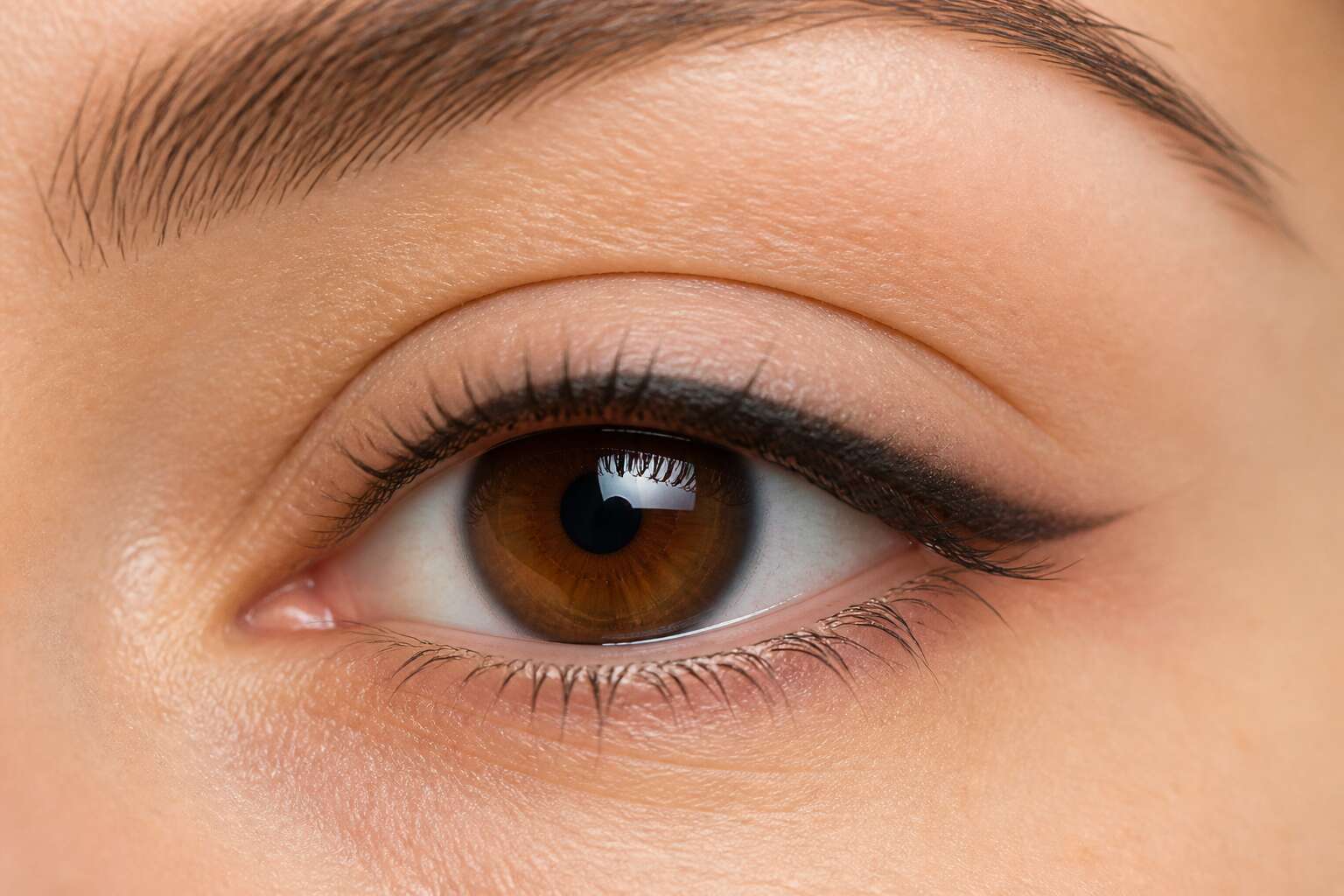
Understanding the Lifespan of Cosmetic Eyeliner
What Is an Eyeliner Tattoo?
Permanent makeup sounds like a promise, but the mirror tells a different story over time. Many clients in Johannesburg and Cape Town are startled when their once crisp lash line begins to look washed out, almost ghostly. The pigments are implanted into the upper dermis, yet the body treats them like an intruder. Macrophages, the immune system’s scavengers, constantly work to break down those particles and carry them away. Sun exposure accelerates this process, as does the natural cell turnover of delicate eyelid skin. This process is the reason many wonder if the ink will disappear entirely.
An eyeliner tattoo, also called cosmetic tattooing or micropigmentation, is a procedure where a technician deposits mineral pigments into the skin using a small needle. It is not a permanent fixture in the way a scar is. It is a deposit of color that sits in a state of gradual erosion. The human body never fully stops its efforts to remove the foreign substance. The treatment requires a balance of depth and delicacy, and the result is always a representation of pigment trapped within living tissue. The fading is not a rumor, it is a biological fact.
– The pigment type used (carbon based versus iron oxide).
– The depth of the needle penetration.
– Your skin’s unique metabolic rate.
– Your exposure to elements like chlorine and direct sunlight.
Each of these variables dictates the speed of disappearance. Some clients see significant lightening within eighteen months. The myth of a permanent line dissolves when you consider that the skin is an active organ, not a static canvas. The honest answer to whether will eyeliner tattoo fade completely is often yes, sometimes leaving only a faint residue or a slight shadow. A lighter pigment might vanish with barely a trace, while a darker one could leave a stubborn, grey ghost of its former self. The line is always moving, always changing.
How Pigment Is Deposited into the Skin
The deposition process is a curious marriage of art and biology. A technician uses a fine needle to create superficial micro-wounds, placing pigment droplets into the upper dermis. This location is deliberate. Too shallow, and the pigment scabs off within a week. Too deep, and the body will aggressively isolate the foreign particles, leading to blurring and migration. The goal is to lodge the colour where skin cells can hold it, but where the immune response is minimal. This placement is why the question of whether will eyeliner tattoo fade completely has no single answer. The durability depends on a series of predictable, yet individual, factors:
– The size of the pigment molecules, which determines how easily they are absorbed.
– The colour saturation achieved during the initial healing phase.
– The presence of underlying skin conditions, such as hyperpigmentation.
Your skin does not simply wear the ink. It reacts to it. The epidermis regenerates every few weeks, pushing pigments upward. The dermis, where the tattoo resides, is more stable, but it is still a living matrix of collagen and elastin. The particles are held loosely, and enzymatic activity breaks them down over time. For many, the result is a gradual softening, not a full erasure. A line that was once a crisp definition becomes a blurred shadow, and in some cases, that shadow is what remains. Clinics in Cape Town often see clients years later, asking if a second session is wise. The answer frequently hinges on how much of the original deposit is left to work with. A full recovery to a bare lash line is possible, but it is not the rule. The pigment’s molecular stability often dictates its longevity, which means the question of will eyeliner tattoo fade completely is one of patience and skin chemistry, not simply of time.
Why Permanent Makeup Is Not Truly Permanent
The label “permanent cosmetic” is a generous exaggeration! In my years covering beauty technology, I have watched eyeliner tattoos transform from crisp strokes into muted shadows within three to five years. The skin is a living organ that continually sheds and regenerates. This constant renewal means the pigment is always on the move, gradually migrating or being absorbed by lymphatic drainage.
Some pigments withstand this process better than others. Carbon-based blacks linger longest, while iron oxide shades dissolve faster. The question of will eyeliner tattoo fade completely depends largely on the pigment’s molecular weight and your skin’s metabolic rate. For some clients, a decade later only a faint trace of the original line remains. For others, the blur becomes permanent.
Key Factors That Determine How Much the Ink Fades
Skin Type and Oil Production
Your skin’s natural oil production acts as a persistent agent of erosion. In dermatology, this is called sebum, and it constantly works to break down pigment particles. For those with an oily T-zone, the answer to whether will eyeliner tattoo fade completely often hinges on this secretion.
Dry skin holds pigment more tightly. Oily skin, however, creates a slippery environment where ink particles get pushed toward the surface. Consider these factors:
- Sebum concentration around the lash line
- Pore size directly on the eyelid
- Metabolic rate of skin cell turnover
High oil output accelerates fading. My sessions with clients in Johannesburg reveal that oily eyelids rarely retain sharp definition beyond three years. For those with oily skin, the answer trends toward a quicker disappearance.
Pigment Color and Formulation
The pigment’s molecular structure dictates its resistance to enzymatic breakdown. Carbon black, the backbone of most black eyeliner inks, forms dense crystalline lattices that immune cells struggle to engulf. Iron oxide pigments, common in brown and grey formulations, fragment more easily. Their smaller particle size allows macrophages to flush them from the dermis with greater efficiency. Lighter shades also require thinning agents to achieve the right consistency, which dilutes the pigment load per square millimetre.
Carrier formulation matters just as much. Glycerol-based carriers bond with the lipid bilayer of skin cells, anchoring pigment deeper. Alcohol-based carriers evaporate quickly, leaving pigment particles vulnerable to phagocytosis. When clients in Johannesburg ask will eyeliner tattoo fade completely, I point to the original ink choice first. Black carbon inks often last seven years or more. Warm browns and soft greys rarely survive past thirty months.
Depth of Needle Penetration
The depth of needle penetration is the difference between a crisp line that lasts a decade and a ghostly smudge that vanishes within a season. The upper dermis, the papillary layer, is the target zone. Here, the collagen fibres hold pigment particles in place, stable and slow to shift. Too shallow, and the ink sits in the epidermis, the skin’s outermost shield, which sheds itself completely every twenty-eight to forty days. That ink goes with it.
Too deep is equally troublesome. The reticular dermis and hypodermis contain blood vessels that carry ink away, and the body’s inflammatory response accelerates fading.
- 0.5 mm to 0.8 mm: epidermis, sheds quickly
- 0.8 mm to 1.5 mm: papillary dermis, ideal for lasting results
- 1.5 mm and beyond: deeper dermis, ink spreads and fades
When clients in Johannesburg ask will eyeliner tattoo fade completely, the answer often depends on where the needle landed that day.
Sun Exposure and Lifestyle Habits
The sun is an artist of erasure, and its canvas is often the delicate skin around your eyes. It is the single most potent force working against the permanence you paid for. Johannesburg’s intense UV index accelerates pigment breakdown relentlessly, making the question of will eyeliner tattoo fade completely a matter of how well you shield your investment. Ultraviolet radiation splits the pigment molecules into smaller, lighter particles, which the lymphatic system then dutifully carts away.
Your daily choices paint the final picture. It is not just the sun that steals the ink. Lifestyle habits silently dictate the longevity of your liner, often overriding the skill of the technician who applied it. A lifetime of sunbathing, smoking, and harsh skincare routines creates a cumulative erosion that no pigment can resist.
Consider the habits that accelerate fading:
– Regular use of chemical exfoliants or retinoids around the eye area
– Prolonged exposure to chlorinated water or salt water without protection
– Vigorous rubbing of the eyes, common with allergy sufferers
– Frequent sauna use, which promotes pigment dispersal through sweating
Each habit independently does little, but together, they compound the inevitable. For those asking will eyeliner tattoo fade completely, the honest answer from a dermatological standpoint is yes, the rate is a direct reflection of your environment. It is a slow decay, not an overnight disappearance.
Aftercare and Skincare Products
Most clients assume the artistry ends when the needle lifts, but the real negotiation with permanence begins at your bathroom counter. Every serum, cleanser, and cream you apply is either a guardian or an adversary to your pigment. The question of will eyeliner tattoo fade completely often hinges on the very products you trust to preserve your skin’s youth, as they wage a silent chemical war against the ink below the dermis.
The most aggressive skincare archenemies are those formulated with active acids and retinoids. While these ingredients excel at cellular turnover, they also accelerate the exfoliation of the pigmented skin cells. Glycolic acid and lactic acid peel away the upper layers where the pigment resides, facilitating a swifter disappearance. Furthermore, vitamin C derivatives, while brilliant for brightening, can oxidize the titanium dioxide in your tattoo ink, muting its hue over time. The irony is palpable; the quest for a radiant complexion often steals the crispness from your lash line.
Beyond the application of specific potions, the manner of your cleansing ritual matters. Oil-based cleansers are notorious for breaking down the lipid barrier that holds the pigment intact. The abrasive nature of a washing mitt or even the mechanical force of a sonic facial brush can scrub away microscopic particles of ink before they have a chance to settle. A gentle patting motion with a mild, non-foaming cleanser is the polite interaction your eyeliner requires.
Here are the common skincare ingredients that directly influence the longevity of your ink:
– Glycolic and salicylic acid, which hasten exfoliation
– Retinol and prescription retinoids, which increase skin cell turnover
– AHA and BHA toners that disrupt the skin’s pH balance
– Benzoyl peroxide, which acts as a bleaching agent
The most significant factor, however, is simply the immediate aftercare window. The first two weeks post-procedure are the formative phase, where the pigment sits in a delicate state of vulnerability. Using the wrong moisturizer with fragrance or alcohol during this period can chemically bind to the pigment and draw it to the surface. Your skincare routine may be flawless for your complexion, yet disastrous for the art residing above your lash line. Therefore, the answer to will eyeliner tattoo fade completely is often scripted by the retail products you purchase long after the initial consultation.
A Realistic Timeline for Fading and Disappearance
The First Few Weeks: Immediate Fading and Healing
During the first few weeks, the pigment sits in the upper dermis as a foreign substance. Swelling and lymph fluid push ink out of the needle track, creating a muted, blurred appearance that frightens many clients. This is not the final result. The eyeliner tattoo will fade completely in some areas if the body rejects the pigment, but most fading here is simply the superficial layer sloughing away.
By day seven, a delicate scab forms over each stroke. Picking at it pulls pigment from underneath. The skin is busy rebuilding itself, and this regeneration consumes pigment particles. What remains after the scab falls off looks lighter and thinner. Clients often panic at this stage, mistaking natural healing for a failed procedure. Yet this is the foundation for the true tattoo.
Months 1 to 6: Visible Lightening
As the months turn, the eyeliner tattoo finds its rhythm within the skin’s deeper layers. The initial harshness softens, and the pigment settles into a state that feels less like a foreign invader and more like a permanent resident. During months one through six, the visible lightening is a quiet, steady process. The body continues its slow, metabolic turnover, and each cycle of cellular regeneration chips away at the ink’s intensity. This is not a dramatic vanishing act but a gradual wearing down, a softening of edges that many clients find more natural than the initial bold stroke.
However, the question of whether will eyeliner tattoo fade completely often hinges on this very period. For most, the answer begins to take shape here. The pigment has been absorbed into the collagen matrix, and while it lightens, it often does not depart. The rate of this fading depends on several internal factors:
– The depth of the original implantation.
– The individual’s immune system response.
– The specific pigment’s molecular weight.
By the sixth month, the line is typically 30 to 50 percent lighter than the day it was applied. It has reached a stable, integrated state. If the pigment was placed too superficially, the body may indeed have expelled most of it, leaving only a phantom trace. But if it was embedded correctly, it remains, a subtle watermark rather than a stark line. The true test of whether will eyeliner tattoo fade completely is not yet answerable, but the trajectory is set. It has become part of the skin’s own story, and its gradual erosion is a slow, poetic negotiation with time.
Year 1 to 3: The Major Shift in Pigment Retention
Year one to three marks the greatest transformation for most eyeliner tattoos. The pigment, once firmly lodged within the dermis, begins a slow migration. Macrophages, the skin’s cleanup crew, work tirelessly to break down the ink particles over these years. The result is subtle at first, then unmistakable.
This is the period where the question of whether will eyeliner tattoo fade completely becomes practical. For most people, the answer becomes evident. Very few tattoos vanish entirely within this span, but the intensity diminishes significantly. The line thins and the edges lose their crisp definition.
Key factors influencing this major shift:
– The pigment particle size, smaller particles fade faster
– Your metabolic rate, faster turnover equals quicker fading
– The specific area of the lash line, which is high in sebaceous glands
By the end of year three, the tattoo often appears as a soft, smoky shadow rather than a defined line. This partial retention is normal. Whether will eyeliner tattoo fade completely is now a matter of patience and skin biology playing out over a longer timeline.
Beyond 5 Years: What Remains on the Eyelid
Beyond the five year mark, your eyelid changes slowly. The pigment no longer migrates at the pace of earlier years. What remains is a faint residue, often a soft grey tint along the lash line. The question of whether will eyeliner tattoo fade completely now depends on this stubborn remnant. For many, complete disappearance is the exception, not the rule.
Sometimes what is left resembles:
– tiny islands of pigment along the lash base
– a diffused shadow that mimics natural eyeliner
– tiny dark flecks that refuse to surrender
By the eighth year, the tattoo has become barely visible. It will not vanish entirely, but it will fade far beyond any visible makeup look. So, will eyeliner tattoo fade completely? The answer is usually a final no.
Touch-Ups, Removal, and What to Expect Next
When to Book a Touch-Up Appointment
The initial “ghost” phase, where pigment vanishes during scabbing, makes many swear their liner is gone for good. But the true test arrives months later. So, will eyeliner tattoo fade completely into an invisible smudge? Often, it leaves a faint, ashen shadow that looks like regret etched in HD. At that point, you face the touch-up dilemma. Booking a session around the 4 to 6 week mark is ideal for perfecting density before any stubborn color reappears. Waiting too long makes the artist guesswork instead of science.
However, complete dissatisfaction leads many to explore laser removal. This process targets the stubborn ink trapped in the dermis, often requiring multiple visits to break down pigment that refuses to exit quietly. If you are plotting an escape from your permanent makeup, expect a series of sessions, not a single zap.
Here is what to expect once the healing dust settles, specifically for South African skin exposed to intense UV:
– A patchy, smudged appearance that mimics a shadow.
– The original pigment turns warmer or ashy over time.
– The line may feather or spread outward beyond your natural lash line.
Eventually, you either submit to a yearly touch-up or embrace your bare, unlined lids. The choice rests on whether you miss the ritual of a steady hand and a daily pencil.
Laser Removal for Unwanted Eyeliner Pigment
Laser removal is not a single zap, it is a campaign. Each session fragments the pigment trapped in the dermis, but will eyeliner tattoo fade completely? For most, the answer emerges after several rounds, not one. I have watched clients in Durban and Cape Town commit to three to five visits, spaced weeks apart, before the line truly loosens.
What to expect next:
- A rubber band snap against the eyelid, sharp but brief
- Instant whitening, called frosting, that fades within minutes
- Swelling and tiny scabs that peel over a week
Dark ink responds best to laser; warm or ashy tones may linger stubbornly. The pigment eventually breaks into particles your lymphatic system clears, leaving either a bare lid or a faint trace you can live with.
Saline Removal Options
Touch-ups are the quiet sequel to every fading tattoo. After the laser has loosened the pigment, some clients choose to redraw that winged line, only to find the skin holds ink differently the second time. Scars from previous sessions can reject fresh pigment, leaving broken patches. The question of will eyeliner tattoo fade completely becomes a negotiation. You do not restart the process; you refine it.
Saline removal offers a gentler, salt based alternative for those who fear the laser’s heat. This method draws pigment to the surface through osmosis, and it favours lighter, warmer inks that lasers cannot catch. The process is slower, demanding patience over precision.
– Expect several saline sessions for a single line
– Scabbing runs deeper than laser treatments
– The tattoo lightens gradually, never instantly
After any removal, the eyelid enters a quiet phase. Redness settles, skin tightens, and the true result only reveals itself after two months. Will eyeliner tattoo fade completely? The final answer arrives only when every trace has decided its own fate.
Choosing to Let It Fade Naturally
The decision to revisit a fading eyeliner tattoo often hinges on patience and perception. For some, the ghost of the original line feels like a personal failure of the procedure. For others, it is a relief. Choosing to let it fade naturally requires a surrender to time, where the pigment breaks down at its own pace and the skin reclaims its canvas without further interference.
Touch-ups after incomplete fading can be a gamble. The fresh pigment must find a home in tissue that has already weathered one deposit. Scar tissue from the initial tattoo may reject the new ink, leading to a spotty result that calls for yet another correction. The process becomes a cycle of expectation and revision, each session altering the landscape of the eyelid.
Removal technologies offer a counterpoint to natural fading, but they carry their own weight. Laser treatment targets darker pigments with precision, while saline extraction pulls ink from the dermis through osmosis. Both paths require recovery and multiple visits. The question of whether will eyeliner tattoo fade completely remains open until the skin has spoken its final word.
In the end, the natural fade is a quiet process. The line softens, thins, and eventually disappears into the crease, leaving no trace of its former intensity. Some clients find this acceptable, even desirable. The skin heals on its own timeline, and the mirror reflects a gradual return to baseline, offering a neutral conclusion to a very personal choice.
Cost Considerations for Reapplying or Removing
Touch-ups after a fade are not a single expense. The price shifts with the studio, the pigment brand, and the condition of the skin beneath. A consultation often reveals whether the remaining line can accept new ink or whether scar tissue will refuse it.
Removal carries a different cost structure. Laser sessions and saline extractions each demand multiple visits, and the final bill can exceed the original tattoo. Deciding between reapplication and removal depends on how much of the old line still lingers.
- The artist’s hourly rate and reputation
- The number of sessions required
- Aftercare products and recovery time
For those asking will eyeliner tattoo fade completely, the answer shapes every rand spent. A full fade may arrive naturally, but the waiting period costs time. Reapplication after a partial fade risks uneven results. Removal offers a cleaner slate, yet only time will tell if the pigment truly lifts.
How to Choose a Qualified Technician
Before committing to any path, ask yourself if the technician understands pigment biology. A skilled professional will evaluate pigment hue, particle depth, and skin response before recommending touch-ups or removal. The consultation itself reveals expertise. You are trusting them with the most delicate skin on your body. The margin for error is thin.
Touch-ups require a steady hand and a realistic eye. The artist must correctly assess whether the remaining pigment holds enough structure for a new pass. Poor alignment leads to uneven lines that fail to fade evenly later. Removal technicians need a different skill set. They must know laser wavelengths, saline concentrations, and aftercare protocols that manage trauma without scarring.
A qualified technician provides transparent answers to your questions. They do not guarantee outcomes. They explain the variables that affect your results.
1. What is their training and certification?
2. How many eyeliner cases have they handled?
3. Can they show healed results from similar skin types?
4. What is their protocol for complications?
These responses separate competent professionals from opportunists. The answer to will eyeliner tattoo fade completely remains uncertain. But the right technician will tell you the truth about your specific situation instead of chasing a sale.
Tips to Slow Down Fading and Maintain the Look
Sun Protection Habits for the Eye Area
South Africa’s average UV index sits far above global norms. Eyelid skin measures barely half a millimetre thick. That means the pigment sits close to the surface and absorbs solar radiation quickly. A mineral sunscreen with zinc oxide creates a physical barrier without migrating into the eye.
Daily habits matter more than touch-ups.
- Store sunglasses with polarised lenses and UV400 protection.
- Reapply sunscreen using a patting motion over the lid.
- Avoid midday sun between 10am and 2pm.
The real answer to whether will eyeliner tattoo fade completely depends on how well you shield the area. Consistent protection slows the breakdown of pigment molecules. Skipping it shortens the period between touch-ups considerably.
Gentle Cleansing and Avoidance of Exfoliants
A harsh cleanser answers the question will eyeliner tattoo fade completely with an emphatic yes. Pigment sits close to the surface on eyelid skin, so aggressive rubbing dislodges it long before the immune system clears it naturally.
Gentle cleansing means a fragrance-free, oil-based remover applied with a soft cotton pad. Swipe downward once, never rub in circles. I cannot overstate how much circular rubbing damages pigment retention. Exfoliants, whether granular scrubs or chemical acids, attack the layer where pigment rests and drag particles toward the surface for disposal.
- Rinse with lukewarm water.
- Pat the lid dry, never wipe.
- Keep retinoids away from the orbital bone.
Will eyeliner tattoo fade completely regardless? Yes. But disciplined cleansing extends pigment retention from a yearly crisis to a multiyear commitment. The difference between a two year and five year look comes down to how you remove your makeup.
Moisturizing Without Harsh Chemicals
Every eyelid is a tiny climate, and the skin below your brow bone has its own rainfall patterns. In Johannesburg, where the air dehydrates faster than a gossip column, moisturizing becomes a survival ritual. Will eyeliner tattoo fade completely? Yes, if you treat your eye area like a lab experiment gone wrong. Harsh chemicals, those alcohols that sting like a scorned auntie, strip the pigment bed and send particles marching toward the surface.
Shea butter and ceramides work better. A thin layer, tapped on with your ring finger, locks the ink in place. Fragrance free is non negotiable. I have watched clients switch from acid toners to plain glycerin, and their liner gained two extra years of life. The orbital bone dislikes water based creams, which push pigment outward. An occlusive balm, applied sparingly, keeps everything where the technician put it.



0 Comments