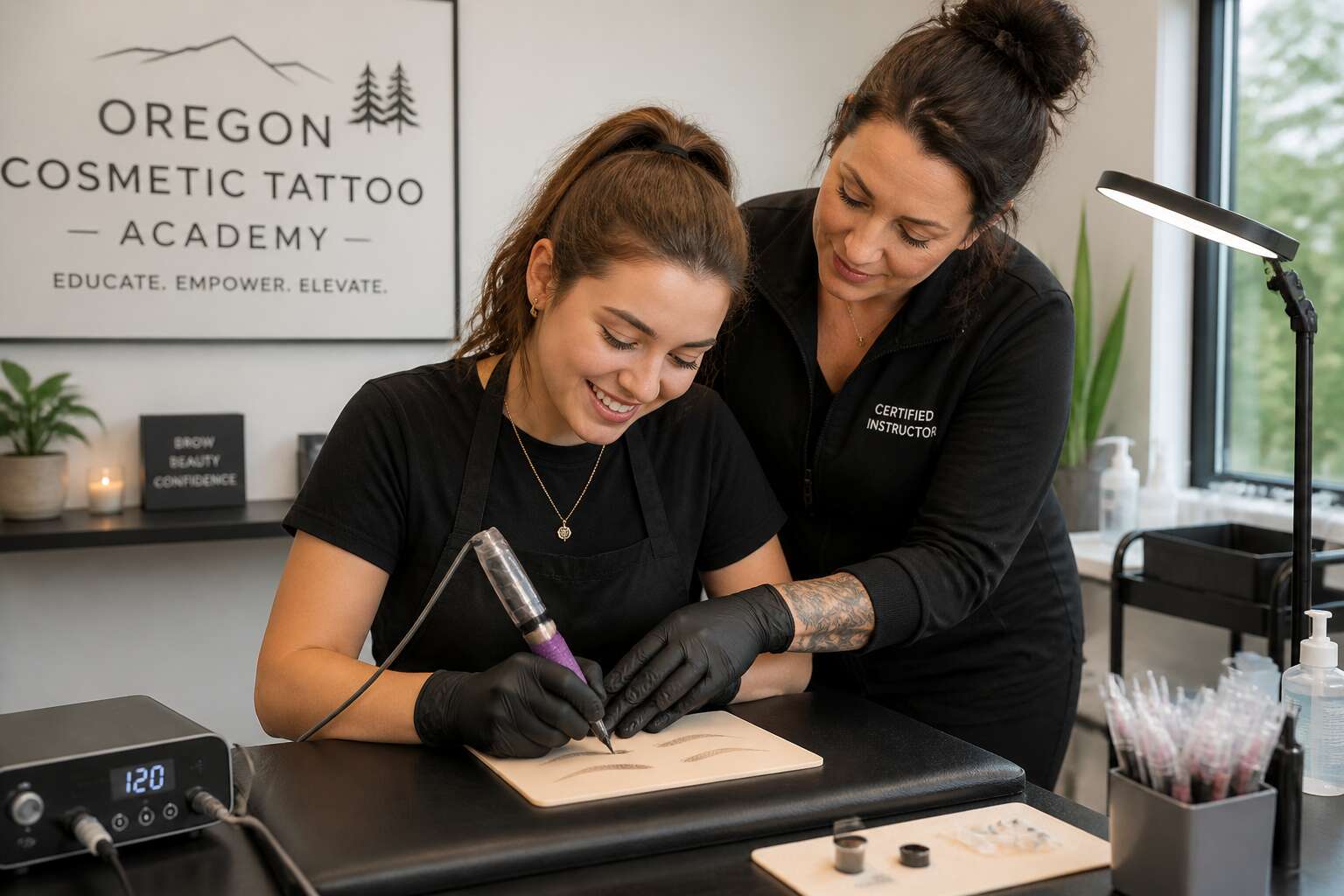
Why Oregon Is a Prime Destination for Cosmetic Tattoo Training
Oregon’s Booming Beauty Industry and the Rising Demand for Permanent Makeup
For those seeking a cosmetic tattoo school Oregon, the licensing framework stands out. Oregon’s beauty sector grew 23 percent in five years, with permanent makeup leading the surge. That growth creates a genuine demand for trained artists.
A cosmetic tattoo school Oregon often pairs classroom theory with live model work supervised by experienced technicians. Students practise microblading and paramedical techniques during week two, not month six. Clinics in Eugene and Salem actively recruit graduates, knowing they already understand pigment science.
Demand keeps rising because more women and men request procedures like scar camouflage or hyperpigmentation correction. Oregon’s outdoor lifestyle also makes touch-ups routine.
Consider these advantages:
- Safety standards exceed national minimums.
- Class sizes stay under eight students.
- Certificates transfer across many states.
Permanent makeup training in Oregon gives technicians a direct path to employment in a booming regional market.
How Oregon’s Licensing Framework Shapes the Quality of Cosmetic Tattoo Education
Oregon’s licensing exam demands 400 apprenticeship hours. That is not a bureaucratic hurdle. It filters out casual operators. A cosmetic tattoo school oregon students trust builds its curriculum around this reality.
The framework forces schools to teach more than basic strokes. Pigmentology, skin tone depth, and biohazard protocols become core modules. Instructors must verify each student’s composure before they ever touch a live model. That is why we see Oregon graduates stand apart in clinics from Portland to Medford!
These are the markers of serious training:
- State mandated sterilisation drills every week
- Written tests on Fitzpatrick skin types
- Supervised practice on real clients, not mannequins
Because the licensing board audits school records, a cosmetic tattoo school oregon cannot hide weak instruction. The result is a workforce with proven endurance. Quality is not a promise. It is a written requirement.
Comparing Oregon-Based Programs with Out-of-State Options for Aspiring Artists
Choosing where to train often comes down to a single question: do you want a certificate or a career? A cosmetic tattoo school oregon anchors its teaching in supervised reality. Out-of-state programs may compress education into weekend intensives, leaving graduates to learn needle depth on paying customers.
Oregon’s model builds confidence through repetition. Students log hundreds of hours on live tissue, managing healing curves and pigment retention. Out-of-state alternatives often skip this depth in favour of faster enrollment.
- Oregon: 400 apprenticeship hours under an established artist
- Out-of-state: variable requirements, sometimes under 100 hours
- Oregon: state audits of training records
- Out-of-state: self-regulated course completion
That is why a cosmetic tattoo school oregon produces artists who can handle complications before they become crises. Out-of-state schools sell convenience; Oregon sells competence.
Essential Curriculum Elements Taught at a Top-Tier Cosmetic Tattoo School in Oregon
Mastering the Fundamentals of Pigment Theory and Skin Anatomy
In a top-tier cosmetic tattoo school oregon, students spend their first weeks studying pigment undertones and the strata of human skin. The curriculum demands precision. You learn how melanin shifts across different complexions and how the dermis accepts pigment. That knowledge shapes every procedure you later perform.
A strong program breaks the material into core subjects.
- Color theory for fading and undertones
- Skin elasticity and healing cycles
- Needle depth and saturation control
These elements are taught through supervised practice on synthetic skins before live models. I have watched students hesitate at the needle until they understand how scar tissue alters pigment flow. The goal is not speed but accuracy. You also examine how previous tattoos change the way pigment settles. That depth separates a confident artist from a cautious beginner.
Hands-On Training in Microblading, Ombré Brows, and Lip Blushing
At a cosmetic tattoo school oregon, the real transformation happens when students step away from theory and place a blade in their gloved hand. I have seen nervous energy turn into deliberate strokes during hundreds of hours of guided practice. Microblading demands a featherlight touch, while ombré brows require a meticulous stippling rhythm. Lip blushing adds another layer of complexity, as the lip tissue’s unique vascularity forces you to adjust pressure and pigment load constantly.
The curriculum drills each technique until it becomes muscle memory. You learn to map facial symmetry, select the correct needle configuration, and manage pigment flow in real time!
- Microblading hair stroke simulation on silicone overlays
- Ombré brow shading with graded pigment saturation
- Lip blush color correction and wound care protocols
Every session is critiqued with surgical precision. That is how a cosmetic tattoo school oregon builds artists who trust their hands completely.
Safety Protocols, Sanitation Standards, and Bloodborne Pathogen Training
Safety protocols carry the same weight as artistry. At a reputable cosmetic tattoo school Oregon, students begin with bloodborne pathogen training that goes deeper than a certificate. They study transmission pathways for hepatitis B and C, HIV, and staphylococcus infections. Every practice session demands compliance with a sterilization chain:
- Autoclave spore testing after each load
- Disposable needle cartridges opened only at the client’s bedside
- Verified disinfection of every work surface between appointments
That routine becomes instinct. Gloving technique, tool handling, and waste disposal are observed and corrected in real time. Hygiene failures are not tolerated, because a single lapse can destroy a career. I have watched students internalize this discipline, and it shows in their confidence on the floor!
Advanced Color Correction and Skin Tone Matching for Diverse Clients
Advanced color correction is where artistry meets science. At a top-tier cosmetic tattoo school Oregon, students learn to neutralize unwanted pigments using the color wheel, not guesswork. They practice on a spectrum of Fitzpatrick skin types, from porcelain to deep ebony, because no single approach works for everyone.
The curriculum breaks down undertones, oxidation shifts, and healed pigment behavior. Students also study:
- Olive and golden undertone adjustments
- Scar tissue and hyperpigmentation camouflage
- Color theory for lip blush on melanin-rich skin
This training ensures every client leaves with a natural, harmonious result, not a carbon copy. That level of precision is what separates a certified artist from someone just holding a machine.
Client Consultation, Aftercare Instruction, and Building a Referral Network
A solid client consultation prevents most post-procedure drama. At a cosmetic tattoo school oregon, students roleplay difficult scenarios: clients with unrealistic expectations, clients with conflicting medical advice, and clients who bring photos of celebrities.
Aftercare instruction focuses on clear communication. Students write aftercare cards that actually get read!
Building a referral network requires a specific skill set. The curriculum covers:
- Consultation worksheets for documenting skin history
- Aftercare phone scripts that respect privacy laws
- Referral incentives that stay ethical and legal
Every student practices on artificial skin until their lines are steady. The school tracks outcomes. Graduates who master these elements find their schedules full.
Oregon State Licensing Requirements for Cosmetic Tattoo School Graduates
Navigating Oregon’s Tattoo Certification Process After Completing Your Training
Once you finish your training at a cosmetic tattoo school oregon, the real paperwork begins. Oregon Health Authority expects more than just your certificate. You need to submit a detailed application, proof of a current bloodborne pathogen course, and a clean criminal background check.
The certification process also includes an open book exam on sanitation and infection control. I found that many graduates underestimate this step. Your instructor should have prepared you, but the responsibility lies with you. To avoid delays, gather these items:
- Official transcript from your training program
- A valid government ID and social security number
- Payment for the nonrefundable application fee
Expect a waiting period of several weeks. If anything is missing, Oregon will mail a deficiency notice. A cosmetic tattoo school oregon with strong administrative support can help you interpret these requirements, but ultimately, your license depends on your own follow through.
Understanding the Difference Between a Tattoo License and a Permanent Makeup Endorsement
Many graduates assume a single tattoo license covers every procedure. I have watched applicants realize too late that Oregon separates a general tattoo license from a permanent makeup endorsement.
A tattoo license governs traditional body art. A permanent makeup endorsement, by contrast, authorizes facial work such as microblading, ombré brows, and lip blushing. Your training at a cosmetic tattoo school oregon should map each skill to the correct credential, because the Oregon Health Authority reviews them separately.
The endorsement demands proof of additional instruction in facial anatomy and pigment implantation. Some programs package this into their core curriculum, but the responsibility to verify falls on you.
- The scope of your tattoo license and the endorsement are not interchangeable.
- Your school’s curriculum must align with OHA requirements for each credential.
- A final license review catches classification errors before they become violations.
An endorsement error exposes you to fines and suspension, even with a valid tattoo license.
Essential Steps to Register Your Cosmetic Tattoo Business in Oregon
Registering a permanent makeup business in Oregon feels like a bureaucratic scavenger hunt. One day you are shading hairlines, the next you are decoding municipal zoning codes. The Oregon Health Authority issues the core credentials, but your city and county may tack on their own permits, so verify local rules before printing business cards.
Start with business entity registration through the Oregon Secretary of State. That step locks in your legal structure. Then secure your tattoo license and permanent makeup endorsement, because the OHA will not schedule an inspection without them.
- Register your business name with the Secretary of State.
- Complete the OHA application for your credentials.
- Schedule a health inspection for your studio.
- Submit proof of training from a cosmetic tattoo school oregon.
Approvals take time, and expired paperwork stalls more applications than missing ink. A cosmetic tattoo school oregon should cover the legal side alongside the needle work. Skip the registration steps and your only customers will be state auditors.
Continuing Education and Renewal Deadlines to Maintain Oregon Compliance
Renewal deadlines in Oregon arrive quicker than most artists expect. The Oregon Health Authority sends reminders, but the responsibility rests on you. Graduates from a cosmetic tattoo school oregon often assume their training certifies them forever. It does not.
Your tattoo license and permanent makeup endorsement require annual renewal. Along with the paperwork, you must show proof of continuing education. The state wants evidence that your infection control knowledge stays current.
- Complete an approved bloodborne pathogen refresher course each renewal period.
- Keep copies of your certificates with your license history.
- Submit renewal forms before the expiration date to avoid lapses.
An expired license means no work, no exceptions. A cosmetic tattoo school oregon worth your money teaches this compliance rhythm from day one, so tracking deadlines becomes second nature, not a scramble.
Costs, Duration, and Financing Options for Oregon Cosmetic Tattoo Programs
Average Tuition Ranges for Comprehensive Cosmetic Tattoo Courses in Oregon
The true cost of a cosmetic tattoo school oregon program goes far beyond the advertised tuition, and most aspiring artists discover this only after enrolling. Comprehensive courses typically range from $3,500 to $8,000, depending on curriculum depth and the number of live models you practice on. Duration varies significantly, with immersive bootcamps finishing in two weeks and part-time tracks spanning three months.
Financing options can ease the initial burden. Many schools offer structured payment plans that break the total into monthly installments, while others accept personal loans or healthcare credit lines. When comparing programs, examine these factors:
- Practice hours on live skin
- Whether the pigment kit and tools are included
- Access to post-graduation business guidance
Paying more for a cosmetic tattoo school oregon does not automatically guarantee better training, nor is the cheapest option the wisest. Weigh the hands-on repetitions against the total price to make a sound investment.
Kit Fees, Supplies, and Hidden Costs to Budget For
Kit fees often exceed the headline price. A cosmetic tattoo school oregon may advertise tuition at $4,000, yet the mandatory supply kit adds $800 to $1,200. Pigments, needles, numbing agents, and practice skins carry their own price. Some programs bundle these materials, while others charge separately.
Duration shapes the real expense at any cosmetic tattoo school oregon. A two week intensive compresses housing and lost wages into one sharp bill. A three month part time schedule spreads payments but extends the period of earning nothing. Financing options like monthly installments soften the upfront weight, though interest can creep in.
Hidden costs wait beyond the classroom. Certification exams, liability insurance, and a business permit all demand funds. Some schools charge extra for retake days. Budget for these common extras:
- Practice skins and disposable supplies for at home drills
- Pigment refills after the training kit runs dry
- Replacement needles and cartridges for your first solo clients
How Many Training Hours You Need to Be Job-Ready in Oregon
Oregon programs range from 60 to over 400 training hours, and that range dictates your total costs. A cosmetic tattoo school oregon may pack microblading and ombré brows into 150 hours, while comprehensive courses extend to 400. More hours mean more practice time, but they also drive up tuition and material fees.
Duration follows the hour count. Two week intensives concentrate all costs into a short period, while three month part time tracks spread payments and reduce the impact of lost wages. Financing options like monthly installments ease the initial burden, though interest may apply. Some schools offer income share agreements, where you pay after you start earning.
Consider these financing routes:
- Monthly payment plans with no interest
- Deferred payment until certification
- Scholarships for underrepresented artists
Budget accordingly, and verify that your chosen cosmetic tattoo school oregon discloses all fees before you commit.
Payment Plans, Scholarships, and Apprenticeship Opportunities in the State
Duration shapes the financial reality of a cosmetic tattoo school oregon program. A two week intensive compresses tuition and living expenses into a single month, while a part time schedule stretching across a year lets you earn while you learn. The longer track often costs more in total because material kits and studio fees accumulate.
Financing options soften the initial burden. Monthly payment plans with no interest suit students who want predictable budgeting. Some schools hold scholarships for artists from underrepresented communities, and these can cover up to half the tuition. Apprenticeship opportunities provide an alternative path where you assist a senior artist and learn through observation, sometimes for reduced fees. Evaluating a cosmetic tattoo school oregon requires comparing these options directly.
Consider these arrangements when comparing schools:
1. A payment plan tied to your program’s schedule.
2. A scholarship application submitted with your portfolio.
3. An apprenticeship placement arranged before you enroll.
How to Choose the Right Cosmetic Tattoo School in Oregon for Your Career Goals
Red Flags to Avoid When Researching Training Facilities
The search for the right cosmetic tattoo school oregon often starts with websites, but the true indicators appear in the classroom. When I researched training facilities, I asked to observe a live session. If a program declined, I considered that a red flag. Another warning sign was a low staff-to-student ratio, which reduces the time instructors can spend on your technique.
- Look for hidden fees that surface after enrollment.
- Ask about pass rates on the Oregon Health Authority exam.
- Check whether instructors still work in the field, not just teach.
A credible program will share alumni outcomes without hesitation. If the atmosphere feels like a sales pitch or promises quick certification, move on. Your career goals need a school that values skill over speed. That’s the kind of clarity you deserve!
Student-to-Teacher Ratios and the Importance of Personal Mentorship
Choosing a cosmetic tattoo school oregon should feel like selecting a mentor rather than a curriculum. The student to instructor ratio matters more than the facility’s appearance. I had twelve classmates for one teacher! My needle control suffered until I booked extra hours alone.
The best cosmetic tattoo school oregon programs cap live sessions at six students. Ask the exact number for your cohort. Watch how instructors divide attention. Do they hover during your first pigment implantations? Do they correct your hand angle before error settles in?
- Observe a real class and count active teaching time per student
- Request a trial day to feel the feedback pace
- Speak with alumni about their mentorship experience
Personal mentorship accelerates your skill curve. A smaller ratio means more eyes on your strokes, more adjustments to machine depth, and more honest critique of your healing photos. That feedback loop is where confidence grows.
Evaluating Student Portfolios and Alumni Success Stories
I always ask to see graduate work before I ask to see the facilities. A cosmetic tattoo school oregon should have a portfolio archive that you can flip through with honest curiosity. Look for healed results, not just fresh pigment. Fresh work always looks good. Healed work reveals the truth.
Alumni trajectories tell you what the school actually produces:
- Where do graduates work?
- Who owns studios?
- Who returned for advanced training?
Alumni success stories are the strongest evidence a program can offer. Scrutinize them carefully. The school’s graduates define its reputation.
Writing a Killer Portfolio and Resume to Get Accepted into Competitive Programs
Admission into a competitive cosmetic tattoo school oregon starts with a portfolio that tells a clear story. Admissions teams look for healed work, varied skin tones, and consistent technique. Fresh pigment always impresses; healed results reveal your true skill. Show both, but lead with the honest evidence.
Your resume must support that portfolio. Highlight customer service, artistic background, and any formal training. Programs want students who understand professionalism from day one. In my experience, the artists who get accepted are the ones who treat their application like a client consultation.
- Include healed before and after images
- Show different brow shapes and lip tones
- List workshops, certifications, and mentorships
Choose a school that aligns with your career goals. A luxury studio path requires different training than a mobile business model. Research the alumni and match your own ambitions to their trajectories. The right cosmetic tattoo school oregon will recognize your preparation and return the effort.

0 Comments